
-
20-year dedicated manufacturer
-
Certified Company
ISO 9001:2015
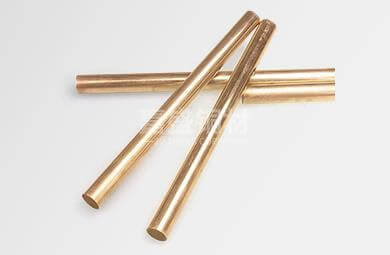
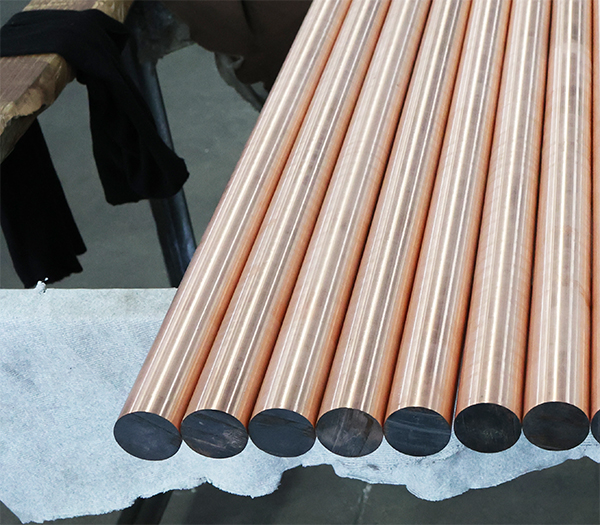

Where exactly is beryllium copper used in the processing of aviation electrodes?
Beryllium Copper (abbreviated as BeCu) is widely used in various critical areas of the aerospace industry due to its unique comprehensive properties, including high strength, high hardness, excellent electrical and thermal conductivity, good fatigue resistance and corrosion resistance, as well as the characteristic of not generating sparks under impact. In particular, its application in aerospace electrode processing is highly targeted and irreplaceable.
I. Typical Application Scenarios in Aviation Electrode Processing
1. Electrical Discharge Machining (EDM) Electrodes
In the manufacturing of aviation components, it is often necessary to perform precise processing of complex shapes on high-strength alloys (such as nickel-based superalloys, titanium alloys, etc.). Traditional cutting methods are insufficient, so electrical discharge machining (EDM) is commonly used.
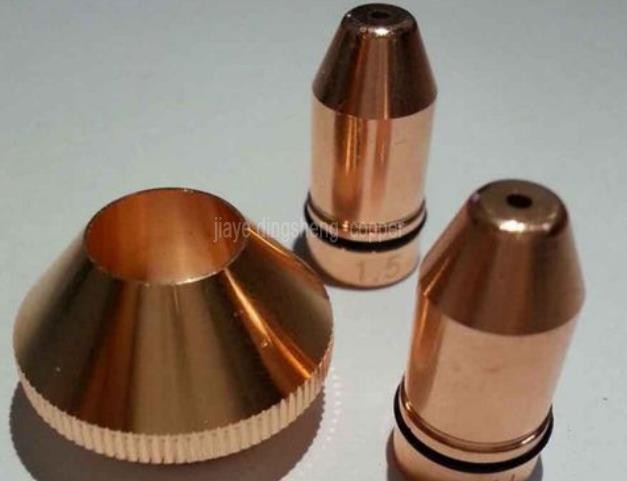
In this type of processing, high-boron-content alloys such as C17200 and C17300 are widely used as electrode materials. The reasons are as follows:
Beryllium copper has a high electrical conductivity (≥ 43 MS/m) and a high thermal conductivity (approximately 3-4 times that of mold steel), which can effectively conduct the heat during the discharge process and reduce electrode wear;
Its high hardness (HRB ≥ 75, some grades can reach HRC 42) ensures that the electrode maintains geometric accuracy during long-term discharge;
Even in a thin sheet structure, it still has excellent rigidity and bending resistance, making it suitable for manufacturing fine and complex electrode contours.
For example, when manufacturing microstructures such as cooling holes for aircraft engine blades and complex inner cavities of combustion chambers, beryllium copper electrodes can achieve high-precision and low-loss processing results.
2. Resistance welding electrodes
During the assembly process of aircraft, spot welding and seam welding techniques are widely used to connect thin-walled structural components (such as skins, frames, etc.). These welding objects are mostly made of stainless steel or high-temperature alloys, and the electrodes must possess high strength, high conductivity, and the ability to withstand high-temperature softening.
The C17200 beryllium copper, due to its superior mechanical properties compared to chromium-zirconium copper (such as C18150), has become the preferred material for high-end resistance welding electrodes:
The tensile strength can reach over 1000 MPa, capable of withstanding high electrode pressure;
The softening temperature is greater than 550℃, and it will not fail even when working continuously at 350℃;
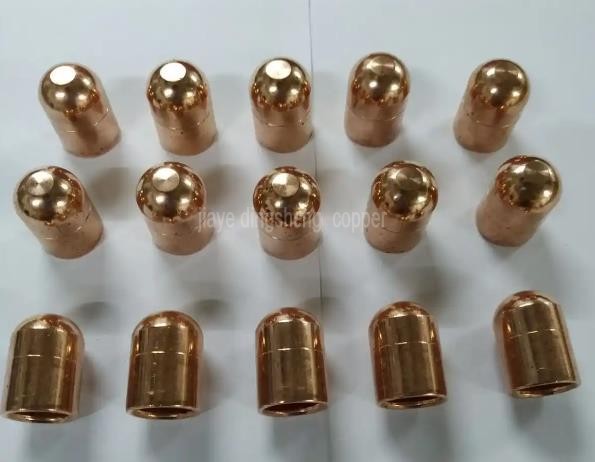
It is suitable for welding difficult-to-solder materials such as stainless steel and high-temperature alloys, ensuring the quality and consistency of the weld points.
Typical applications include automatic spot welding of aircraft fuselage components and precise seam welding of engine parts, etc.
3. Micro-motors and Sensor Brushes/Contacts
In avionics systems, numerous micro-motors, relays, switches, and sensors are employed. These components have extremely high requirements for the conductivity stability, wear resistance, and arc erosion resistance of the materials.
Be copper strips such as C17300 and C17000 (with thickness ranging from 0.01 to 2.0 mm) are used for manufacturing:
Micro motor brush;
Relay contacts of the flight control system;
Internal elastic contact elements of the attitude sensor.
Its advantages lie in: being able to maintain stable contact resistance and mechanical elasticity under high-frequency vibration and extreme temperature cycles, thus avoiding signal interruption or failure.
Explosion-proof tools and safety components

Application scenarios:
Non-sparking explosion-proof tools used in aviation maintenance and assembly, such as wrenches, fixtures, hammers, etc.
Safe conductive components used in high-temperature, high-pressure, and flammable environments. Advantages:
Impact-free spark-free, high-strength, corrosion-resistant, meeting aviation safety standards.
Why choose beryllium copper instead of other copper alloys?
Compared to the commonly used chromium-zirconium copper (C18150) or pure copper, beryllium copper has significant advantages in the application of aviation electrodes:
Performance indicators | Beryllium copper(C17200/C17300) | Chromium-zirconium-copper(C18150) |
Tensile strength | 1000–1310 MPa | 400–600 MPa |
Hardness | HRB 78–88 / HRC 38–44 | HRB 75–85 |
Electrical conductivity | 18–22% IACS(≈43 MS/m) | 80–90% IACS(Higher) |
Softening temperature | >550℃ | ≈450℃ |
Wear resistance and deformation resistance | Excellent, suitable for thin sheet/finely structured electrodes | Generally |
Although chromium-zirconium-copper has better electrical conductivity, in the aerospace electrode application scenarios that require a balance of strength, hardness and thermal stability, beryllium-copper demonstrates superior overall performance.
# Tags:

Will chromium zirconium copper corrode rapidly in a humid environment?
Previous Post