-
20-year dedicated manufacturer
-
Certified Company
ISO 9001:2015
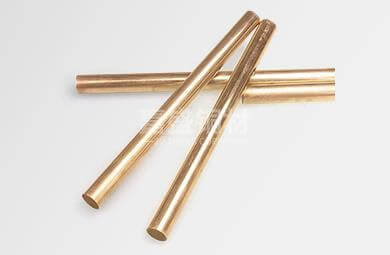
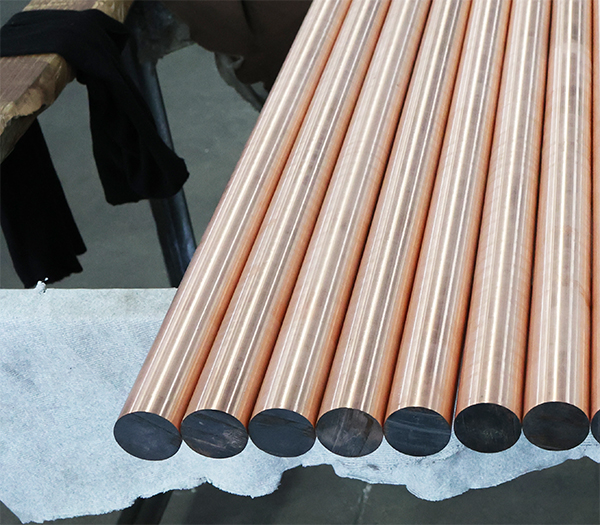

Why is beryllium copper used for the brushes of micro-motors?
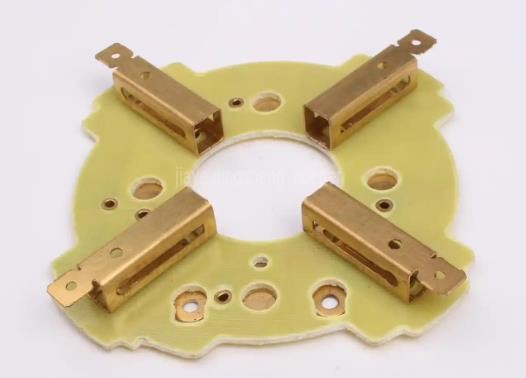
The reason why beryllium copper (Beryllium Copper, abbreviated as BeCu) is widely used as the brush material for micro-motors is mainly due to its comprehensive performance advantages in terms of high strength, high conductivity, excellent elasticity, wear resistance, and non-magnetism. These characteristics precisely meet the strict requirements of micro-motors for the brush material in terms of stability, lifespan, efficiency, and safety. The following provides an in-depth analysis from multiple perspectives on the reasons behind this:
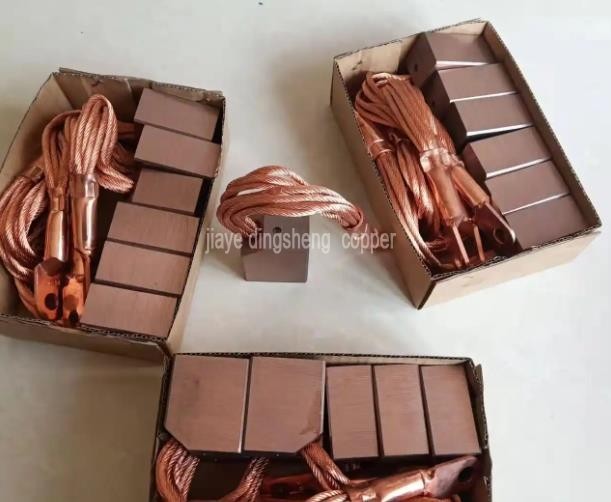
High Conductivity: Ensuring Efficient Current Transmission
Micro-motors are typically small in size and have high power density. The brushes need to transmit current stably within a limited contact area.
The conductivity of C17510 and other high-conductivity beryllium copper can reach 45%–60% IACS (International Annealed Copper Standard);
Compared to traditional phosphor bronze (with a conductivity of approximately 15% IACS) or stainless steel (<5% iacs="">
In applications such as mobile phone vibration motors, unmanned aerial vehicle (UAV) control servos, and precision instrument drive motors, this high conductivity capability can prevent performance degradation or failure due to overheating.
High Strength and High Elasticity: Maintaining Stable Contact Pressure
The brush needs to maintain good contact with the commutator or collector ring for a long time, relying on the spring clips to provide a constant pressure.
After being treated with solid solution and aging, beryllium copper can achieve an ultimate tensile strength of 1105 MPa and a yield strength of 1035 MPa, far exceeding that of ordinary copper alloys;
Its elastic modulus is as high as 128 GPa, and it has "small elastic hysteresis", meaning that it can still return to its original state after repeated bending deformation and is less likely to undergo permanent deformation;
This high elasticity ensures that the brush can maintain a stable contact force in high-speed rotation, vibration or temperature change environments, preventing sparking or signal interruption.

High Wear Resistance and Anti-Fatigue Properties: Extended Service Life
The micro-motor brushes are in constant friction with rotating components, and wear is one of the main failure modes.
The hardness of beryllium copper can reach HRC 38–44 (or 350–360 HV), significantly superior to pure copper or tin-phosphor bronze;
Its anti-fatigue limit is high, and it is unlikely to crack even under millions of reciprocating movements;
In high-frequency usage scenarios such as window lifting motors in new energy vehicles and robot joint servo motors, beryllium copper brushes can achieve reliable operation for tens of thousands of hours;
In addition, its dense, pore-free, and sand-free microstructure (obtained through high-pressure forging or rolling) further enhances the consistency of wear resistance.
Non-magnetism and Explosion Safety: Suitable for Sensitive Environments
In fields such as medical equipment, aerospace, and military, where electromagnetic interference is sensitive, the magnetism of the material is of utmost importance.
Beryllium copper is a completely non-magnetic material and will not interfere with precision sensors or magnetic environments (such as near MRI equipment);
At the same time, it does not produce sparks during impact or friction ("impact-free spark" characteristic), making it suitable for flammable and explosive environments (such as oil pump motors, mining equipment);
This characteristic makes it the preferred choice for explosion-proof tools and safety-critical systems as an electrode material.
Corrosion Resistance and Thermal Stability: Adaptability to Complex Conditions
The micro-motor may operate in humid, high-temperature or environments containing corrosive gases.
Beryllium copper exhibits excellent corrosion resistance, particularly having good resistance to salt spray, moisture and weak acid environments;
The softening temperature is as high as 930℃, and its mechanical properties remain unchanged even when the motor temperature rises to 150–200℃;
This makes it suitable for motors in harsh conditions such as those in the engine compartment of automobiles and outdoor unmanned aerial vehicles.
Industry Practice and Technological Trends Support
In recent years, as micro-motors have been evolving towards miniaturization, high rotational speed, and long lifespan, the requirements for brush materials have been continuously increasing:
Enterprises such as Guoyan Zhongxi have obtained the patent "High Precision and High Performance Brush Materials for Micro-Motors" (CN 118738967 B), with the core being based on the optimization of the beryllium copper system;
Bullion 17200, Bullion 17510 and other grades have become the standard brush materials for mobile phone battery contacts, computer fan motors, electric toothbrushes, micro pumps and other products;
Industry reports indicate that the demand for high-reliability brushes in fields such as new energy vehicles and industrial robots has surged, driving the penetration rate of beryllium copper in high-end micro-motors to continuously increase.
Conclusion
Beryllium copper, due to its superior properties such as high elasticity, high conductivity, wear resistance, fatigue resistance, corrosion resistance, and wide temperature range, is widely used in micro-motor brushes to ensure reliable current conduction, extend the service life of the brushes, and adapt to demanding conditions such as high precision, high speed, and harsh environments. Although its cost is higher than that of phosphor bronze, in high-end and critical applications, beryllium copper remains an indispensable core material.
# Tags:
Where exactly is beryllium copper used in the processing of aviation electrodes?
Previous Post