
-
20-year dedicated manufacturer
-
Certified Company
ISO 9001:2015
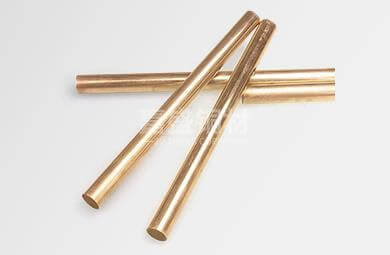
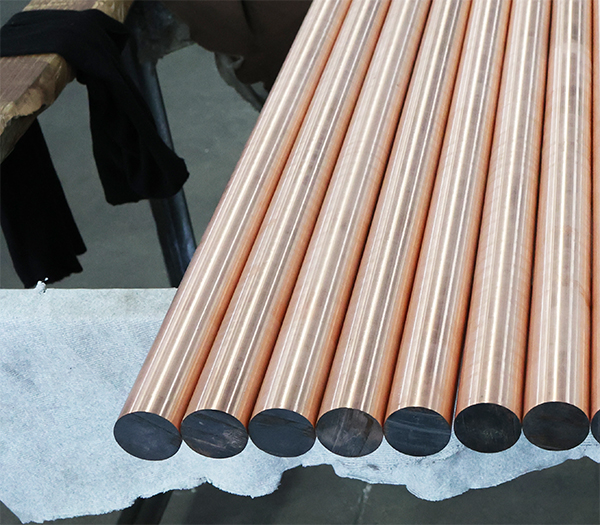

What does beryllium do to copper?
Beryllium (Be), as a key alloying element in copper alloys, exerts significant and diverse strengthening and functionalization effects on the copper (Cu) matrix. Its core role is manifested in the enhancement of mechanical properties, the improvement of heat treatment response, the optimization of physical properties, and the imparting of special functions. Here is a detailed analysis:
Significantly enhance strength and hardness (precipitation strengthening mechanism)
The solubility of beryllium in copper decreases sharply with decreasing temperature (for example, it is approximately 2.7% at 870°C, and almost insoluble at room temperature). Through solid solution + aging heat treatment, the over-saturated beryllium atoms precipitate from the copper matrix to form nanoscale γ' phases (stabilized CuBe intermetallic compounds), which are dispersed throughout the lattice and strongly hinder dislocation movement, thereby achieving precipitation hardening.
The tensile strength can reach 1100–1450 MPa (more than 5 times that of pure copper)
The hardness is 36–46 HRC (≈380–440 HV)
The elastic limit and fatigue strength have been significantly improved, suitable for high-frequency dynamic components (such as springs, relay contacts)
This strengthening effect makes beryllium copper be hailed as "steel in copper".
Maintain good electrical conductivity and thermal conductivity
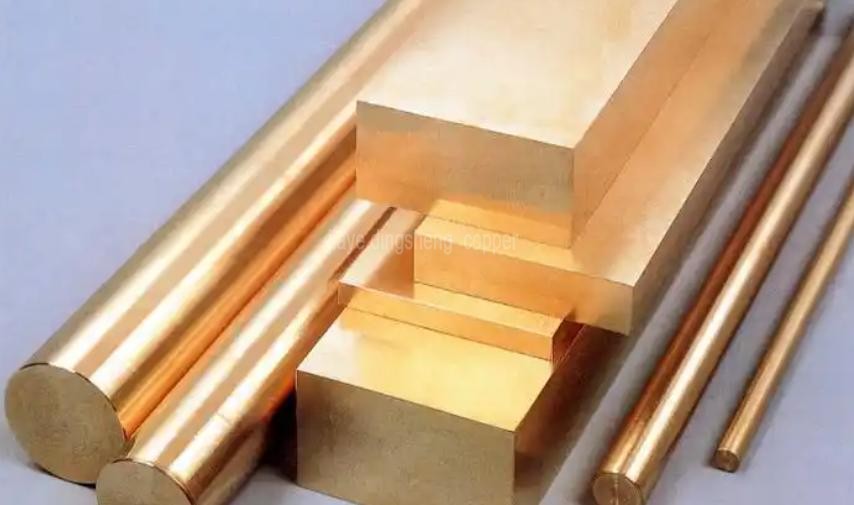
Despite the addition of alloying elements, due to the low content of beryllium (typically 1.7% - 2.1%) and the fact that the precipitated phase is an ordered intermetallic compound rather than an impurity phase with strong electron scattering, C17200 and other high-strength beryllium copper alloys can still maintain a conductivity of 18% - 30% IACS, which is much higher than that of other high-strength copper alloys (such as chromium copper and zirconium copper).
Thermal conductivity: 105–160 W/(m·K), suitable for efficient heat dissipation scenarios (such as chip heat sink substrates, injection mold inserts).
In applications that require a balance between high strength and electrical conductivity/thermal conductivity (such as 5G connectors, battery contacts), beryllium copper is indispensable.
Improving high-temperature stability and stress relaxation resistance
The CuBe precipitated phase formed by beryllium remains stable at temperatures ≤ 400°C, enabling the material to maintain a high elastic modulus (approximately 128 GPa) and anti-rheological properties during high-temperature service.
After adding cobalt or nickel, the grain growth is further suppressed, resulting in more uniform aging precipitation and enhanced anti-stress relaxation performance (crucial for long-term pressure-bearing electrical contact components).
Enabling Special Physical and Safety Characteristics
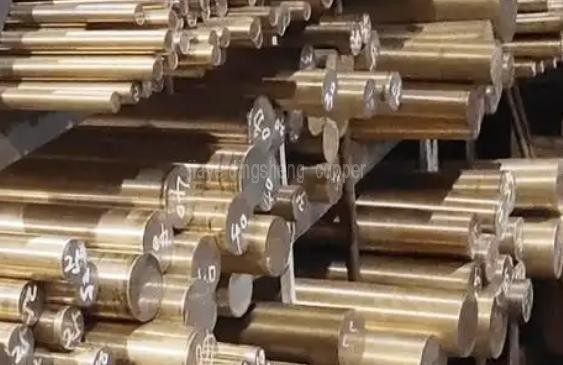
Non-magnetic: Completely annealed or aged state is non-magnetic, suitable for magnetic-sensitive environments such as MRI equipment and aerospace sensors 6.
No Spark on Impact: No sparks are generated during friction or impact, making it an ideal material for manufacturing explosion-proof tools (such as wrenches used in oil and mining industries).
High Elasticity and Anti-Fatigue: Small elastic lag, stable rebound, suitable for manufacturing precision elastic components such as diaphragms, bellows, and micro switches.
# Tags:
-
beryllium do to copper
What is the effect of alloying tin to copper?
Previous Post