-
20-year dedicated manufacturer
-
Certified Company
ISO 9001:2005
What is the effect of alloying tin to copper?
Adding tin to copper (forming copper-tin alloy, or bronze) significantly alters the various properties of copper and is widely used in industry and daily life. Here is a summary of the detailed effects:

Mechanical performance improvement
1. Hardness and strength increase significantly
The addition of tin makes bronze's hardness and tensile strength higher than pure copper. The higher the tin content, the greater the hardness and strength.
For example, bronze with a 10% tin content has an tensile strength of up to 590 MPa, much higher than pure copper.
2. Abrasion resistance improves
Bronze, due to its increased hardness, has excellent wear resistance and is often used to manufacture high-friction components such as bearings, gears, and shaft sleeves.
3. Brittleness increases, plasticity decreases
If the tin content is too high (e.g., >15%), the alloy's brittleness increases, plasticity decreases, and processing becomes more difficult.
Changes in physical properties
1. Conductivity decreases
Pure copper has excellent conductivity, but adding tin significantly reduces conductivity. The conductivity of tin bronze is approximately 15% - 28% of pure copper.
Therefore, bronze is not suitable for electrical wi but can be used for electronic contacts, connectors, etc. with lower conductivity requirements.
2. Thermal conductivity decreases
The addition of tin reduces the conductivity of copper, but it is still better than many other metal materials and is suitable for applications with moderate heat dissipation requirements.
3. Melting point decreases
The melting point of bronze is lower than that of pure copper, approximately 800 - 950°C, making it easier to cast and process.
Chemical performance improvement
1. Corrosion resistance significantly enhances
Tin can form a dense oxide film on the copper surface, effectively preventing further oxidation and corrosion, especially in seawater and humid environments. Therefore, bronze is widely used in ships, marine engineering, and chemical equipment.
2. Oxidation resistance improves
Bronze is more stable in high-temperature and atmospheric conditions, less prone to copper green, and has stable performance over the long term.
Process performance optimization
1. Casting performance is excellent
Bronze has a low melting point and good fluidity, making it suitable for complex castings such as sculptures, mechanical parts, valves, etc.
2. Processing performance is good
Bres with high conductivity requirements, but can be used for electronic contacts, connectors, etc. with lower conductivity requirements.
Typical application fields
Mechanical manufacturing: bearings, gears, turbines, pumps and valves, wear-resistant parts.
Shipping and marine engineering: propellers, valves, seawater pipelines.
Electronics and electrical: contacts, switches, connectors, conductive springs (requiring balance of conductivity).
Cultural arts: sculptures, bells and drums, musical instruments, commemorative coins.
Chemical and energy: heat exchangers, corrosion-resistant containers, pipelines.
The Role and Method of Adding Tin During Copper Melting
The Role of Adding Tin During Copper Melting
When melting copper, adding a certain amount of tin can bring multiple benefits:
1. Increase hardness: Pure copper has relatively low hardness. By adding tin, the hardness of the alloy can be increased, making it more suitable for manufacturing parts and tools that need to withstand certain mechanical strength.
2. Enhance corrosion resistance: Copper-tin alloy, also known as bronze, has good corrosion resistance and can maintain stable performance in humid or corrosive environments.
3. Improve processing performance: After adding tin, the fluidity of the copper alloy is enhanced, making it easier to cast and forge, enabling the production of more complex parts.
4. Improve electrical conductivity: Within a certain tin content range, the electrical conductivity of copper-tin alloy is optimized, suitable for electrical and electronic industries.
5. Aesthetics: The addition of tin can also change the color and luster of copper, making the alloy present a unique metallic texture, enhancing the ornamental value of the product.
Method of Adding Tin to Copper Melting
The process of adding tin to copper melting requires precise control of temperature and alloy composition to ensure the quality and performance of the final product. The following are specific methods for adding tin:
1. Prepare materials: Prepare high-quality copper blocks and tin blocks, as well as melting furnaces, crucibles, and tools. Ensure all materials are pure to avoid the influence of impurities on the alloy performance.
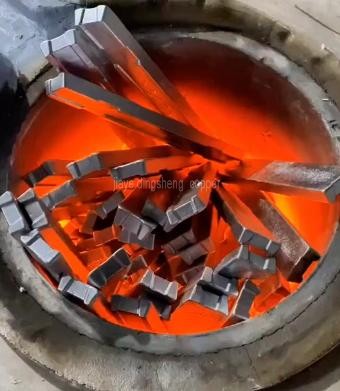
2. Preheating and melting: Light the melting furnace and place the copper block in the crucible to heat it until it completely melts. During the melting process, continuously monitor the temperature and ensure the atmosphere inside the furnace is suitable.
3. Adding tin blocks: After the copper has completely melted, gradually add the tin block to the copper melt according to the predetermined alloy composition ratio. Add it slowly and evenly to avoid sudden temperature drops and uneven alloy composition.
4. Mixing and stirring: After adding the tin block, use specialized tools for thorough stirring to ensure the copper and tin can fully blend. This step is crucial for the uniformity and final performance of the alloy.
5. Pouring and cooling: When the alloy is well mixed, pour it into the pre-prepared molds. Let the alloy cool naturally in the molds to avoid rapid cooling that causes internal stress.
6. Heat treatment and processing: After the alloy has completely cooled, perform heat treatment as needed to improve mechanical properties and electrical conductivity. Then, perform forging, rolling, or other processing techniques to obtain the desired shape and size.
7. Quality inspection and testing: Finally, conduct quality inspections and performance tests on the produced copper-tin alloy, including hardness, corrosion resistance, and electrical conductivity, etc. Ensure the product meets the predetermined standards and requirements.
Through the above steps, tin can be effectively added to the melted copper to produce high-performance copper-tin alloys. These alloys have broad application prospects in mechanical manufacturing, electrical electronics, and architectural decoration, etc.
# Tags:
-
What is the effect of alloying tin to copper
Is copper harder to weld than aluminum?
Previous Post