-
20-year dedicated manufacturer
-
Certified Company
ISO 9001:2015

How to Solve the Heat Dissipation Problem in Injection Molds?
The Advantages of Beryllium Copper High Thermal Conductivity Materials
I. The "Heat Dissipation Bottleneck" in Injection Molding Production
During injection molding, cooling time typically accounts for 60%-80% of the entire molding cycle. Traditional mold steels (such as P20 or NAK80), while strong, have low thermal conductivity, easily leading to:
Excessively Long Molding Cycles: Heat accumulates in deep cavities or thick walls, resulting in slow cooling and limiting production speed.
Product Deformation and Shrinkage: Uneven mold surface temperature leads to inconsistent cooling and shrinkage, causing product warping.
Shortened Mold Life: Thermal stress generated by localized overheating accelerates mold fatigue.
II. Beryllium Copper Alloy: The Ideal Thermal Solution
Beryllium copper, due to its unique physical properties, is the preferred material for solving the mold heat dissipation problem:
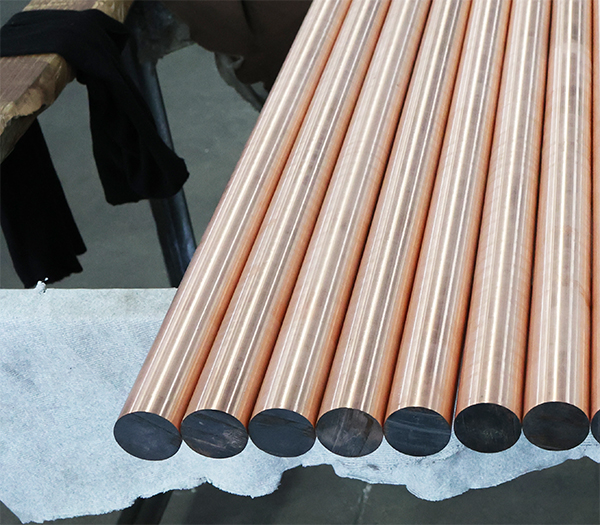
Extremely High Thermal Conductivity: The thermal conductivity of beryllium copper is typically 3 to 5 times that of ordinary mold steel. This means that heat can be rapidly transferred from the molten plastic to the cooling water.
Excellent Physical Properties: While maintaining high thermal conductivity, beryllium copper also possesses extremely high hardness (up to HRC 36-42) and wear resistance, enabling it to withstand high-pressure injection molding.
III. Specific Advantages of Beryllium Copper in Improving Efficiency
Shortened Molding Cycle: Using beryllium copper inserts (such as inserts and cores) instead of steel parts can increase cooling efficiency by more than 20%, significantly increasing hourly output.
Eliminating Localized Hot Spots: In narrow areas of the mold where it is difficult to arrange cooling water channels, beryllium copper can achieve uniform heat dissipation due to its inherent rapid conductivity.
Improved Product Quality: Uniform mold temperature effectively reduces heat shrinkage cavities and deformation, improving the dimensional stability and surface finish of the product.
IV. Jiasheng Beryllium Copper Application Recommendations
To achieve the best balance, we recommend prioritizing the use of beryllium copper in the following parts of the injection mold:
Deep cavity bottoms or slender cores.
Hot runner nozzles and bushings.
Bottleneck areas that cannot be reached by the circulating water system.
# Tags:
-
Beryllium Copper, Injection Molding, Heat Dissipation, Mold Design, Jiasheng Metal
Why Aluminum Bronze is the "Corrosion King" of Marine Engineering?
Previous Post