-
20-year dedicated manufacturer
-
Certified Company
ISO 9001:2015
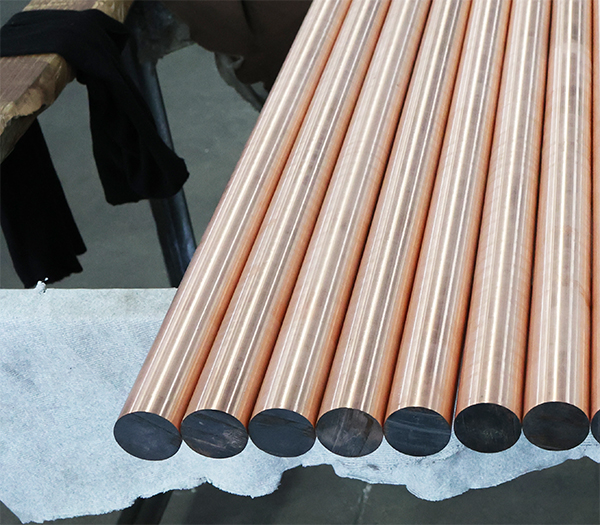

Why Aluminum Bronze is the "Corrosion King" of Marine Engineering?
A Deep Dive into its Metallurgical Mastery .
Seawater corrosion causes billions of dollars in losses to global industries every year, but we have a technology that has been used for centuries and remains a leader in the field.
Seawater is not just saline; it is a complex environment of microbial biofouling and high-velocity fluid erosion.
While ordinary metals succumb to pitting or scaling, Aluminum Bronze stands resilient, remains the top choice for propellers, valves, and fasteners.
What is the scientific logic behind this?
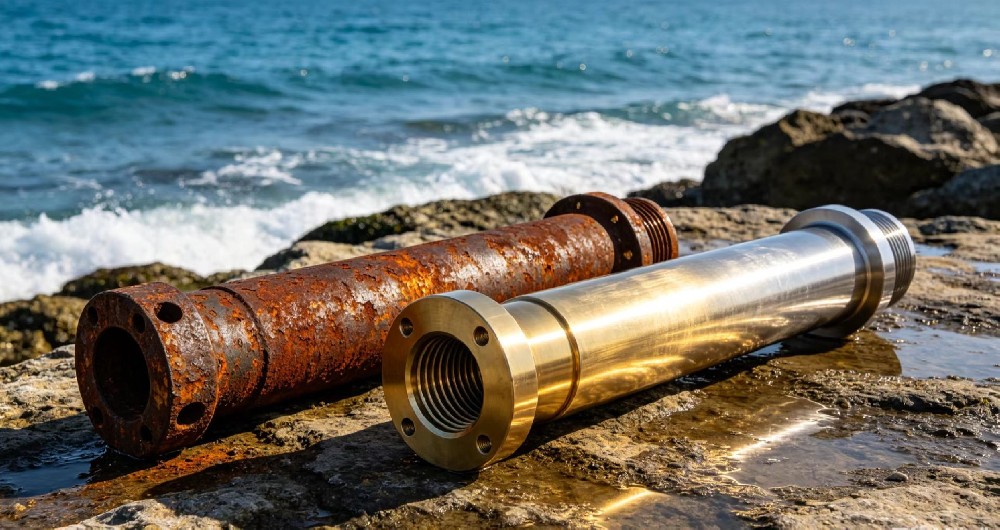
The "trump card" of aluminum bronze lies in the aluminum-rich oxide film that forms on its surface.
Instant Formation: Upon contact with oxygen or water, aluminum atoms migrate rapidly to the surface.
Dense Structure: Unlike porous rust, this oxide layer is extremely dense, hard, and adheres tightly to the substrate.
Dynamic Repair: Even if the surface is scratched or eroded, the film "heals" almost instantaneously in seawater, preventing deep corrosion.
In high-velocity fluids (like thruster blades), metals are prone to cavitation erosion. The superior hardness and work-hardening traits of Aluminum Bronze ensure integrity under high flow rates. Furthermore, the slow release of copper ions acts as a natural biocide, preventing barnacles and bio-growth, thereby maintaining hydrodynamic efficiency.
In field applications, Nickel-Aluminum Bronze (e.g., C95800), with additions of Ni and Fe, performs exceptionally well. Nickel not only refines the grain structure but also enhances resistance to dealuminification under high-pressure deep-sea conditions.
# Tags:
-
Aluminum Bronze, Marine Corrosion, C95800, Nickel Aluminum Bronze, Propeller Material, Anti-biofouling, Seawater Resistance, Cavitation Erosion
Why is beryllium copper used in micro-motor brushes?
Previous Post