-
20-year dedicated manufacturer
-
Certified Company
ISO 9001:2015
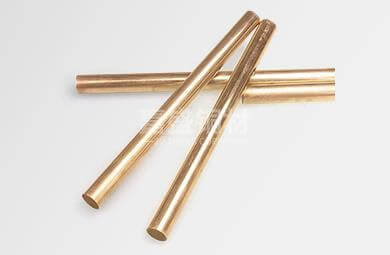
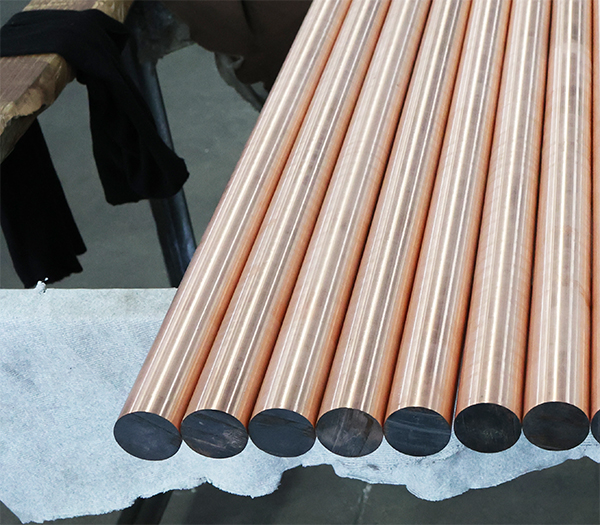

Why is beryllium copper used in micro-motor brushes?
The widespread use of beryllium copper in micro-motor brushes stems primarily from its comprehensive performance advantages, including high strength, high conductivity, excellent elasticity, wear resistance, and non-magnetic properties. These characteristics perfectly match the stringent requirements of micro-motors for brush materials in terms of stability, lifespan, efficiency, and safety. The following is a deeper analysis of the reasons from multiple perspectives:
I. High Conductivity: Ensuring Efficient Current Conduction
Micro-motors are typically small in size and have high power density, requiring brushes to stably transmit current within a limited contact area.
High-conductivity beryllium copper, such as C17510, can achieve a conductivity of 45%–60% IACS (International Annealed Copper Standard);
Compared to traditional phosphor bronze (conductivity approximately 15% IACS) or stainless steel (<5% IACS), beryllium copper significantly reduces contact resistance and Joule heat loss, improving motor efficiency;
In applications such as mobile phone vibration motors, drone servos, and precision instrument drive motors, this high conductivity prevents performance degradation or failure due to overheating.
II. High Strength and High Elasticity: Maintaining Stable Contact Pressure
The brush needs to maintain good contact with the commutator or slip ring for a long time, relying on the spring to provide constant pressure.
Beryllium copper, after solution treatment and aging, has a tensile strength of up to 1105 MPa and a yield strength of 1035 MPa, far exceeding that of ordinary copper alloys;
Its elastic modulus is as high as 128 GPa, and its "low elastic hysteresis" means that it can still return to its original shape after repeated bending deformation, and is not prone to permanent deformation;
This high elasticity ensures that the brush can maintain stable contact force under high-speed rotation, vibration, or temperature change environments, preventing arcing or signal interruption.
III. High Wear Resistance and Fatigue Resistance: Extending Service Life
Micro-motor brushes rub against rotating parts for a long time, and wear is one of the main failure modes.
Beryllium copper boasts a hardness of HRC 38–44 (or 350–360 HV), significantly superior to pure copper or tin-phosphor bronze.
Its fatigue limit is high, resisting cracking even after millions of reciprocating cycles.
In high-frequency applications such as window lift motors in new energy vehicles and servo motors for robot joints, beryllium copper brushes can achieve tens of thousands of hours of reliable operation.
Furthermore, its dense, pore-free, and sand-hole-free microstructure (achieved through high-pressure forging or rolling) further enhances its wear resistance consistency.
IV. Non-magnetic and Explosion-proof Safety: Suitable for Sensitive Environments
In fields sensitive to electromagnetic interference, such as medical equipment, aerospace, and military applications, the magnetic properties of materials are crucial.
Beryllium copper is a completely non-magnetic material, not interfering with precision sensors or magnetic field environments (such as near MRI equipment).
Simultaneously, it does not generate sparks upon impact or friction ("spark-free impact"), making it suitable for flammable and explosive environments (such as oil pump motors and mining equipment).
This characteristic makes it the preferred brush material for explosion-proof tools and safety-critical systems.
V. Corrosion Resistance and Thermal Stability: Adaptable to Complex Operating Conditions
Micromotors may operate in humid, high-temperature, or corrosive gas environments.
Beryllium copper exhibits excellent corrosion resistance, particularly against salt spray, moisture, and weak acids; its softening temperature is as high as 930℃, and it maintains its mechanical properties even when the motor temperature rises to 150–200℃;
This makes it suitable for harsh operating conditions such as motors in automotive engine compartments and outdoor drone motors.
VI. Industry Practice and Technological Trends Support
In recent years, as micromotors have developed towards miniaturization, high speed, and long lifespan, the requirements for brush materials have been continuously increasing: Companies such as Guizhou Research Institute and China-Greece Technology have obtained patents for "High-Precision, High-Performance Brush Materials for Micromotors" (CN 118738967 B), the core of which is based on beryllium copper system optimization;
Grades such as C17200 and C17510 have become standard brush materials for products such as mobile phone battery contacts, computer fan motors, electric toothbrushes, and micro pumps;
Industry reports indicate that the demand for high-reliability brushes in fields such as new energy vehicles and industrial robots is surging, driving the continuous increase in the penetration rate of beryllium copper in high-end micromotors.
Conclusion
Beryllium copper, due to its comprehensive advantages such as high elasticity, high conductivity, wear resistance, fatigue resistance, corrosion resistance, and wide temperature range, is widely used in micromotor brushes to ensure reliable current conduction, extend brush life, and adapt to harsh operating conditions such as high precision, high speed, and harsh environments. Despite its higher cost compared to phosphor bronze, beryllium copper remains an irreplaceable core material in high-end and critical applications.
# Tags:
-
Beryllium Copper; Micro Motor Brush,Brush Material,Beryllium Copper Alloy Performance,High-End Micro Motor; New Energy Vehicle Motor,Precision Motor Material
Beryllium Copper: A High-Performance and Practical Material for Die Casting Molds
Previous Post