-
20-year dedicated manufacturer
-
Certified Company
ISO 9001:2015
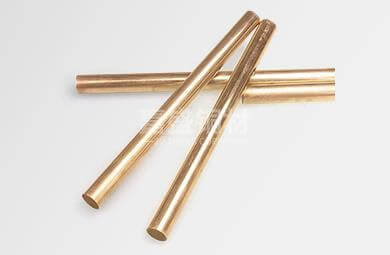
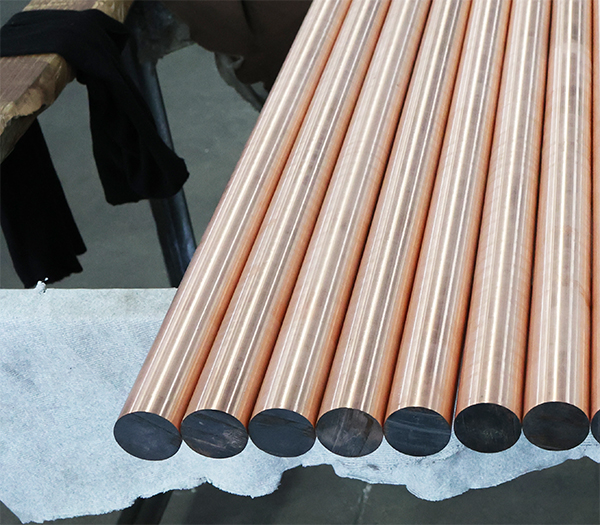

What is the hardness of beryllium bronze?
I. Hardness Values and Influencing Factors of Beryllium Bronze
The hardness of beryllium bronze (such as common grades like C17200, C17300, etc.) is closely related to its composition and heat treatment status:
1. Annealed state: The hardness is approximately HRB 60-80 (about HRC 10-20), at this time the material is relatively soft and easy to be processed and shaped.
2. After age hardening: Through solution treatment + aging, the hardness can be increased to HRC 30-42 (refer to the ASM Metal Handbook). For example, the typical hardness of C17200 after heat treatment is HRC 38-42.
3. Peak hardness: Under special processes (such as cold working + aging), some grades can reach HRC 45 or above (according to ASTM B196/B196M standards).
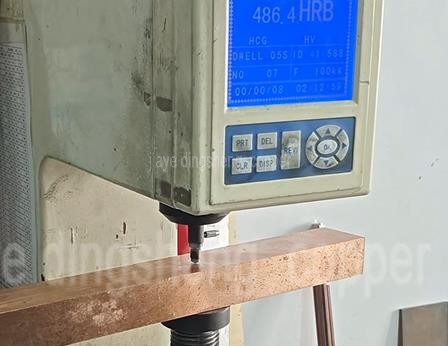
* Professional data source *:
- The American Society for Testing and Materials (ASTM) standards B196/B196M stipulate the mechanical property indicators of beryllium bronze.
- Volume 2 of the ASM Metal Handbook clearly indicates the hardness range under different heat treatment states.
II. Characteristics and Correlation of Beryllium Bronze with Hardness
1. The secret of high strength: The beryllium element (1.8-2.0% content) forms a strengthening phase with copper, and after aging treatment, BeCu particles are precipitated, significantly enhancing the hardness and tensile strength (up to 1200 MPa or more).
2. Elasticity and wear resistance: The high hardness makes its elastic modulus reach 128 GPa, suitable for manufacturing springs, precision instrument gears and other components that require wear resistance.
III. Application Scenarios and Hardness Selection Suggestions
- High hardness requirement (HRC 40+): Used for explosion-proof tools in oil drilling, aviation bearings, etc., it needs to be achieved through cold rolling + aging process.
- Medium hardness (HRC 30-38): Suitable for electronic connectors, mobile phone shielding covers, etc., balancing forming performance and durability.
IV. Comparison with Other Copper Alloys
Alloy type | Typical hardness (HRC) | Characteristics |
Beryllium bronze (C17200) | 38-42 | High strength, good conductivity |
Phosphor bronze (C51000) | 15-25 | Excellent elasticity but relatively low hardness |
Brass (H62) | 10-20 | Easy to process, low hardness |
Summary: The hardness of beryllium bronze can be flexibly adjusted through the process. Users need to select the heat treatment plan according to their actual needs. Its excellent performance makes it indispensable in the high-end industrial field.
# Tags:
What are the main parameters to consider when choosing beryllium copper rods?
Previous Post