-
20-year dedicated manufacturer
-
Certified Company
ISO 9001:2015
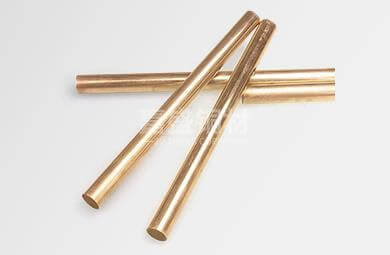
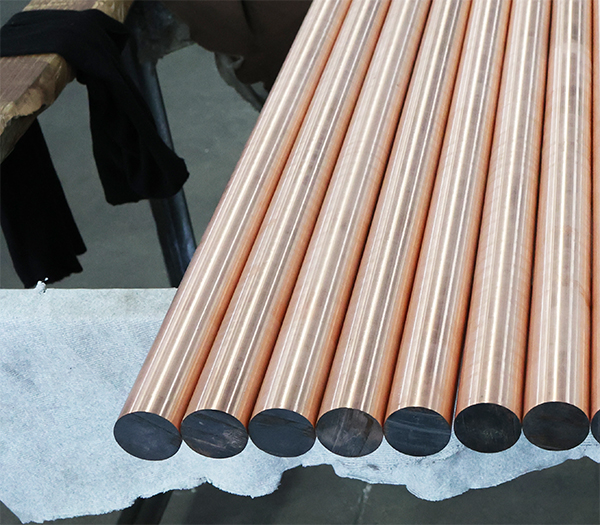

Why Forged Beryllium Copper C17200 is the Ultimate Choice for Extreme Environments?
I. Materials Advantages of C17200 Beryllium Copper
C17200 (also known as Alloy 25 or CuBe2) is a precipitation-hardening copper alloy containing approximately 1.8% to 2.0% beryllium. Following solution and age heat treatments, it exhibits a comprehensive combination of properties that crowns it the "King of Copper Alloys."
1. Unrivaled "Ultra-High Strength" and "Hardness"
Through solution and age hardening (precipitation hardening), fine coherent precipitates form within the C17200 matrix, creating a powerful strengthening effect. Its tensile strength can exceed 1380 MPa (200 ksi), with a hardness reaching HRC 36 to 45. This shatters the traditional perception that copper alloys are soft, allowing its strength to rival that of high-end alloy steels.
2. Excellent Electrical and Thermal Conductivity
Although the addition of alloying elements reduces the conductivity of pure copper, age treatment allows the electrical conductivity of C17200 to recover to 22% to 30% IACS (International Annealed Copper Standard). Its thermal conductivity is approximately 105 W/(m·K), which is significantly higher than that of standard mold steels. This makes it irreplaceable in components requiring rapid heat dissipation under high stress, such as welding electrodes and plastic injection mold inserts.
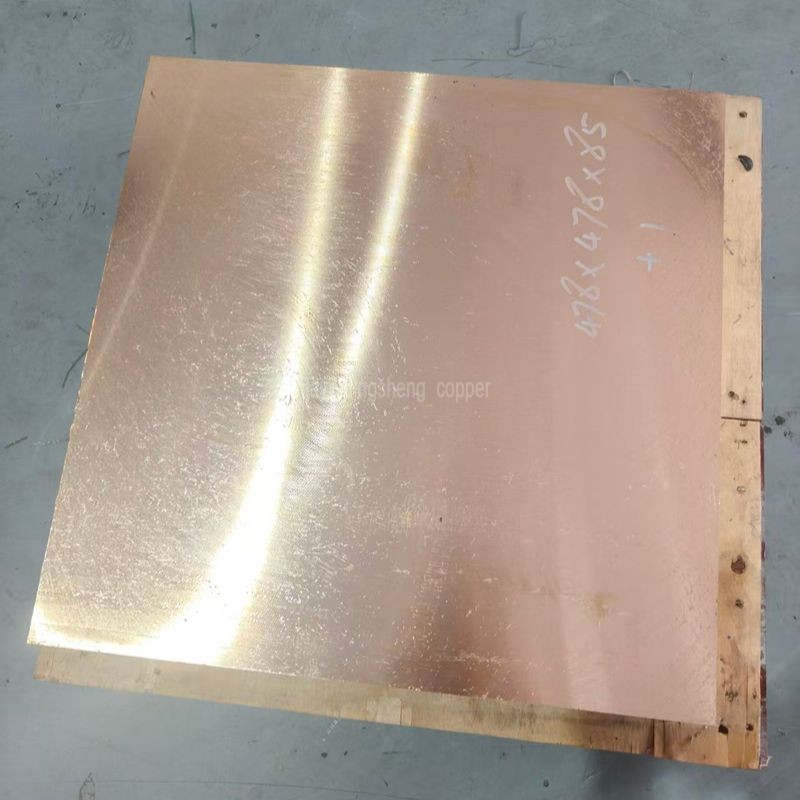
II. Critical Enhancements Delivered by the Forging Process
Beryllium copper is generally categorized into forged beryllium copper and cast beryllium copper. Forging involves subjecting the billet to high-pressure plastic deformation within a temperature range of 649°C to 816°C (1200°F to 1500°F). Compared to casting, the forging process directly resolves the core pain points of C17200 in high-end applications:
| Forging Advantage | Problem Solved / Enhancements |
| High Density & Defect Elimination | High-pressure forging compacts the internal microstructure, eliminating common casting defects such as shrinkage cavities, porosity, and sand holes, resulting in a significantly higher material density. |
| Microstructure Homogenization & Grain Refinement | It breaks down coarse cast grains and forms a unifor 你m, fine recrystallized grain structure. This ensures a balanced hardness distribution and excellent performance consistency. |
| Mechanical Property Enhancement | The strength, toughness, and fatigue life of forgings are vastly superior to castings, enabling components to withstand higher impact forces and cyclic stresses. |
| Isotropic Optimization | It mitigates the chemical segregation (alloy banding) common in castings and reduces anisotropy, making it ideal for dimension-sensitive scenarios like precision mold inserts. |
III. Typical Application Scenarios
The combined "High Strength + High Density + Defect-Free" properties of forged C17200 make it exceptionally well-suited for the following fields:
Mold Industry: Die casting molds, drawing dies, and injection mold inserts—utilizing its high thermal conductivity for rapid heat dissipation, high hardness to resist wear, and a dense microstructure to guarantee mold service life and surface precision.
Aerospace: Generator rings, bearings, and fasteners—providing lightweight design, high strength, and fatigue resistance.
Electrical & Electronics: Relay springs and high-end connectors—offering excellent elasticity, moderate conductivity, and non-magnetic properties.
Explosion-Proof Safety: Non-sparking tools and mining equipment—ensuring no sparks are generated upon impact.
Marine Engineering: Valves, pump bodies, and bearing bushings—meeting the requirements of seawater corrosion resistance and high-pressure sealing.
Here are the academic and technical references for the article:
ASTM B196/B196M - Standard Specification for Copper-Beryllium Alloy Rod and Bar (UNS C17200 Standard Specification).
Copper Development Association (CDA) - UNS C17200 Properties and Performance Envelope.
# Tags:
-
Forged Beryllium Copper, C17200, Alloy 25, CuBe2, Beryllium Copper Properties, Forging Process, Extreme Environments, Mold Industry, Aerospace Components, Non-Sparking Tools
Beryllium Copper in NEVs: Why Choose It for Connectors and Relays?
Previous Post