-
20-year dedicated manufacturer
-
Certified Company
ISO 9001:2015

How is the quality controlled during the mass production of beryllium copper?
The quality control for batch production of beryllium copper must cover the entire process from raw material procurement, melting/rolling/forge, heat treatment, surface treatment, and final product inspection.The quality control for batch production of beryllium copper must cover the entire process from raw material procurement, melting/rolling/forging, heat treatment, surface treatment, and final product inspection. Through standardized procedures, precise process control, and full-chain traceability, it ensures the consistency of performance, size, and appearance of each batch of products. Through standardized procedures, precise process control, and full-chain traceability, it ensures the consistency of performance, size, and appearance of each batch of products.The core control measures are as follows:
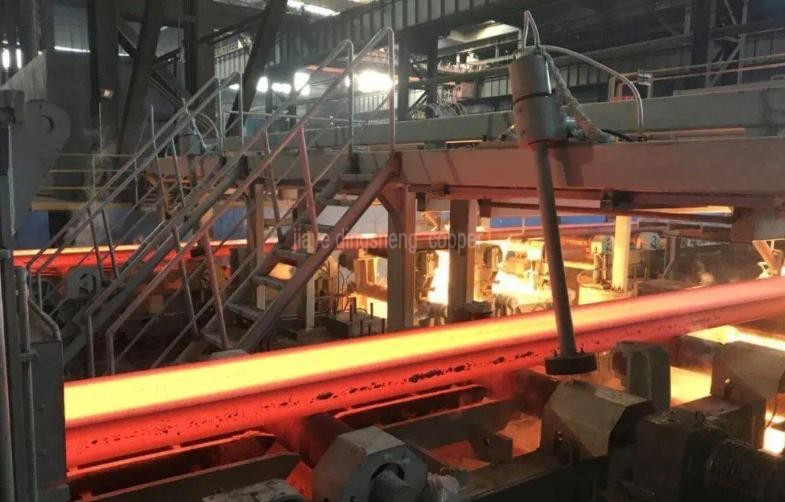
1. The core control measures are as follows:
1. Source control of raw materials: Ensure "inherent qualification"
Strictly select and review suppliers
Source control of raw materials: Ensure "inherent qualification"
Strictly select and review suppliers
Choose qualified raw material suppliers (such as those with ISO 9001 and IATF 16949 certifications), and require them to provide material certificates (such as melting composition reports, mechanical property reports), ensuring that beryllium copper raw materials (such as aluminum ingots, steel billets, alloy elements) meet the grade standards (such as 6061 aluminum alloy requiring Si and Mg content within the specified range).
Choose qualified raw material suppliers (such as those with ISO 9001 and IATF 16949 certifications), and require them to provide material certificates (such as melting composition reports, mechanical property reports), ensuring that beryllium copper raw materials (such as aluminum ingots, steel billets, alloy elements) meet the grade standards (such as 6061 aluminum alloy requiring Si and Mg contents within the specified range).
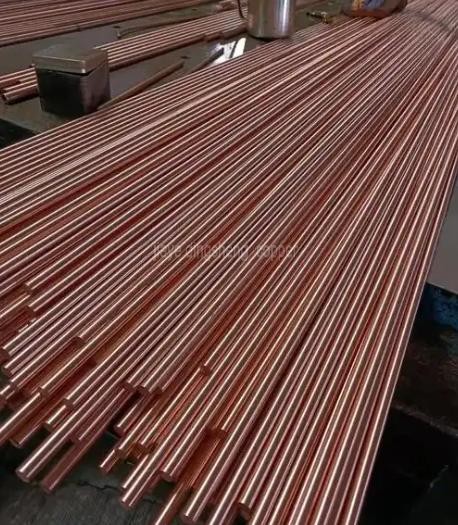
After each batch of raw materials enters the factory, conduct random inspections:
After each batch of raw materials enters the factory, conduct random inspections:
Chemical composition: Use spectrometers to detect key elements (such as C, Mn, Cr content in steel), with deviations ≤ 5% of the standard value;
Chemical composition: Use spectrometers to detect key elements (such as C, Mn, Cr contents in steel), with deviations ≤ 5% of the standard value;
Appearance and size: Check if beryllium copper raw materials have cracks, inclusions, shrinkage cavities, etc., with size tolerance controlled within ±0.5mm (for rods, plates);
Appearance and size: Check if beryllium copper raw materials have cracks, inclusions, shrinkage cavities, etc., with size tolerance controlled within ±0.Standardized pre-treatment of beryllium copper raw materials
5mm (for rods, plates);
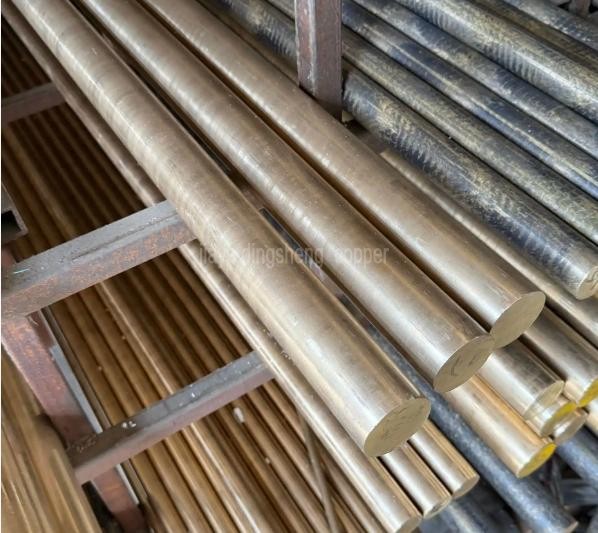
Standardized pre-treatment of beryllium copper raw materials
Homogenize the beryllium copper raw materials (such as 480℃×6h for aluminum alloy cast rods), eliminating internal composition segregation and stress, avoiding performance variations in subsequent processing;
Homogenize the beryllium copper raw materials (such as 480℃×6h for aluminum alloy cast rods), eliminating internal composition segregation and stress, avoiding performance variations in subsequent processing;
Remove oxide scale and oil stains from the surface of beryllium copper raw materials (such as acid washing, sandblasting), preventing impurities from being carried into subsequent processes (such as forming defects on the surface during rolling);
2. Process control in production: Reduce "process fluctuations"
Remove oxide scale and oil stains from the surface of beryllium copper raw materials (such as acid washing, sandblasting), preventing impurities from being carried into subsequent processes (such as forming defects on the surface during rolling);
2. Process control in production:Melting/Smelting stage: Control composition and purity
Reduce "process fluctuations"
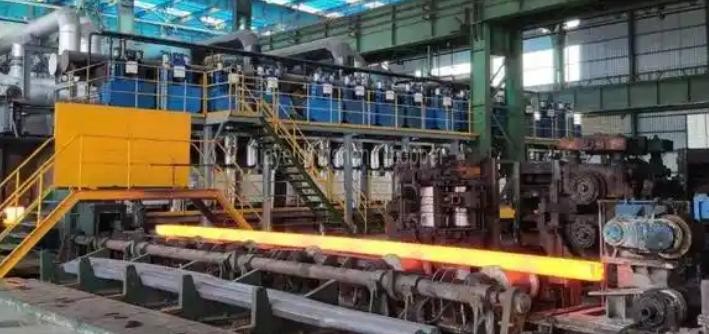
Use automated batching systems (precision ±0.Melting/Smelting stage: Control composition and purity
Use automated batching systems (precision ±0.01%) to accurately add alloy elements according to the formula, avoiding human error in proportioning;
01%) to accurately add alloy elements according to the formula, avoiding human error in proportioning;
During melting, conduct real-time monitoring of composition through online detection (such as direct reading spectrometers), and automatically adjust (such as adding elements or diluting) if the deviation exceeds the limit;
During melting, monitor composition in real time through online detection (such as direct reading spectrometers), and automatically adjust (such as adding elements or diluting) if the deviation exceeds the limit;
Deoxidation and slag removal: Use inert gases (such as argon) to stir out hydrogen (hydrogen content ≤ 0.Deoxidation and slag removal: Use inert gases (such as argon) to stir out hydrogen (hydrogen content ≤ 0.15ml/100g), and remove inclusions (size ≥ 50μm) through filtration devices (such as ceramic filters);
15ml/100g), and remove inclusions (size ≥ 50μm, number ≤ 1 per kg) through filtration devices (such as ceramic filters).
Plastic processing (rolling/forge/pressing): Ensure size and structure
Set standardized process parameters:
Plastic processing (rolling/forging/pressing): Ensure size and structure
Set standardized process parameters:
Rolling: Control rolling temperature (such as hot rolling of steel at 1000-1200℃), reduction rate (≤ 30% per pass), rolling speed (5-15m/s), avoiding uneven thickness due to parameter fluctuations (thickness deviation ≤ ±0.03mm);
Rolling: Control rolling temperature (such as hot rolling of steel at 1000-1200℃), reduction rate (≤ 30% per pass), rolling speed (5-15m/s), avoiding uneven thickness due to parameter fluctuations (thickness deviation ≤ ±0.03mm);
Pressing: For aluminum alloy pressing, mold temperature (450-500℃), pressing speed (20-50m/min) need to be stable, ensuring the size tolerance of the profile section (such as width deviation ≤ ±0.1mm);
Pressing: For aluminum alloy pressing, mold temperature (450-500℃), pressing speed (20-50m/min) need to be stable, ensuring the size tolerance of the profile section (such as width deviation ≤ ±0.1mm);
Online size inspection: Use laser diameter gauges, infrared thickness gauges to monitor product size in real time, and automatically alarm and adjust equipment (such as rolling mill roll gap) if out of tolerance;
Heat treatment stage: Stabilize mechanical properties
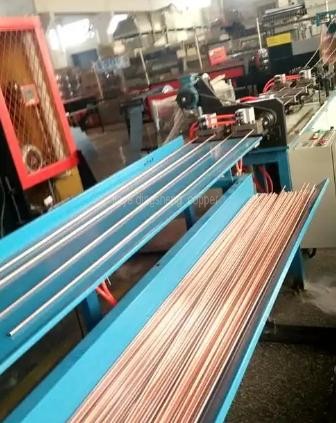
Online size inspection: Use laser diameter gauges, infrared thickness gauges to monitor product size in real time, and automatically alarm and adjust equipment (such as rolling mill roll gap) if out of tolerance.
Heat treatment stage: Stabilize mechanical properties
Use continuous heat treatment furnaces (temperature control accuracy ±5℃), strictly follow holding times (such as 530℃×2h for 6061-T6 solution treatment, 120℃×8h for aging treatment);
Use continuous heat treatment furnaces (temperature control accuracy ±5℃), strictly follow holding times (such as 530℃×2h for 6061-T6 solution treatment, 120℃×8h for aging treatment);
Cooling speed control: Such as water temperature (20-30℃) and water flow rate during quenching to ensure uniform alloy element precipitation (such as Mg₂Si phase in aluminum alloys), avoiding performance fluctuations (hardness difference ≤ 5HV) per batch;
Cooling speed control: Such as water temperature (20-30℃) and water flow rate during quenching to ensure uniform alloy element precipitation (such as Mg₂Si phase in aluminum alloys), avoiding performance fluctuations (hardness difference ≤ 5HV) for the same batch;
Take 3-5 samples per furnace run to test mechanical properties (tensile strength, elongation), and only proceed to the next process if qualified.
3.Take 3-5 samples from each furnace run to test mechanical properties (tensile strength, elongation), and only proceed to the next process if qualified.
3. Surface treatment control: Improve appearance and corrosion resistance
Surface treatment control: Improve appearance and corrosion resistance
Standardized surface treatment process Pickling / Alkali washing: Control the solution concentration (such as 10%-15% sulfuric acid), temperature (50-60℃), and time (3-5 minutes).Standardized surface treatment process Pickling / Alkali washing: Control the solution concentration (such as 10%-15% sulfuric acid), temperature (50-60℃), and time (3-5 minutes). Avoid excessive corrosion (surface roughness Ra ≤ 1. Avoid excessive corrosion (surface roughness Ra ≤ 1.6 μm) or incomplete cleaning (residual oxide scale);
6 μm) or incomplete cleaning (residual oxide scale);
Coating / Layer: Such as zinc coating thickness (8-12 μm), adhesion (scratching test failure ≤ 1 grade), monitor in real time with an online film thickness meter to ensure uniformity;
Coating / Layer: Such as zinc coating thickness (8-12 μm), adhesion (scratching test failure ≤ 1 grade), monitor in real time with an online film thickness meter to ensure uniformity;
Anodic oxidation (aluminum alloy): Oxide film thickness (10-15 μm), sealing quality (no diffusion in the drop liquid test for 30 seconds), test salt spray performance for each batch (no white rust after 48 hours).
Appearance defect prevention
Anodic oxidation (aluminum alloy): Oxide film thickness (10-15 μm), sealing quality (no diffusion in the drop liquid test for 30 seconds), test salt spray performance for each batch (no white rust after 48 hours).
Automated production lines reduce manual contact (avoiding fingerprints and scratches), set dust-proof workshops for key processes (cleanliness ≥ 100,000 grade);
Preventing appearance defects
Light detection table (illuminance ≥ 800 lux) conducts full inspection of appearance, eliminating scratches, bulges, color differences, etc. (A-grade products must not have visible defects).
Four.Automated production lines reduce manual contact (avoiding fingerprints and scratches), set dust-proof workshops for key processes (cleanliness ≥ 100,000 grade);
Finished product testing and traceability: Ensure "factory qualified"
Full item testing and sampling rules
Light detection table (illuminance ≥ 800 lux) conducts full inspection of appearance, eliminating scratches, bulges, color differences, etc. (A-grade products must not have visible defects).
Four. Finished product inspection and traceability: Ensure "factory qualified"
Conventional testing: Sample each batch at a 5% ratio (at least 3 pieces), test dimensions (calipers, projectors), mechanical properties (tensile testing machine, hardness tester), chemical composition (spectroscopy analysis);
Full item inspection and sampling rules
Special testing: Such as non-destructive testing (ultrasonic detection of internal defects, magnetic particle testing of surface cracks), conduct 100% testing for high-quality products (such as aerospace materials) for 100%;
Conventional inspection: Sample 5% of each batch (minimum 3 pieces) for testing dimensions (calipers, projectors), mechanical properties (tensile testing machine, hardness tester), chemical composition (spectroscopy analysis);
Environmental testing: Salt spray resistance (neutral salt spray 48-1000 hours), resistance to high and low temperatures (-40℃~120℃ cycling), verify long-term performance stability.
Full process traceability system
Special inspection: Such as non-destructive testing (ultrasonic detection of internal defects, magnetic particle testing of surface cracks), conduct 100% testing for high-quality products (such as aerospace materials);
Assign each batch of products a unique number, record raw material batches, production equipment, process parameters (temperature, time), and test results to achieve "bidirectional traceability from beryllium copper raw materials to finished products";
Environmental testing: Resistance to salt spray (neutral salt spray 48-1000 hours), resistance to high and low temperatures (-40℃~120℃ cycling), verify long-term performance stability.
Full process traceability system
Establish a quality file to preserve for more than 3 years, facilitating quick identification of causes when problems arise (such as if the hardness of a certain batch is not up to standard, it can be traced back to the temperature record of the heat treatment furnace).
Five. Equipment and personnel management: Reduce "human and equipment errors"
Equipment maintenance and calibration
Assign each batch of products a unique number, record raw material batches, production equipment, process parameters (temperature, time), and test results to achieve "bidirectional traceability from beryllium copper raw materials to finished products";
Regular calibration of key equipment (such as melting furnaces, rolling mills, hardness testers) (once a month), ensuring accuracy (such as hardness tester error ≤ ±2HV);
Establish equipment maintenance plans (such as rolling mill grinding once a week), avoiding product defects caused by equipment wear (such as scratches on the rolling mill causing surface indentation).
Personnel training and operation norms
Establish a quality file to preserve for more than 3 years, facilitating quick identification of causes when problems arise (such as if the hardness of a certain batch is not up to standard, it can be traced back to the temperature record of the heat treatment furnace).
Five. Equipment and personnel management: Reduce "human and equipment errors"
Operators must pass assessment to be on duty, be familiar with SOP (standard operating procedures), such as heat treatment workers need to master the method of adjusting the furnace temperature curve;
Equipment maintenance and calibration
Promote "first-piece inspection system": Before each shift of production, the first-piece product must pass full-item testing to be qualified before batch production, avoiding batch errors.Regular calibration of key equipment (such as melting furnaces, rolling mills, hardness testers) (once a month), ensuring accuracy (such as hardness tester error ≤ ±2HV);
Establish equipment maintenance plans (such as rolling mill grinding once a week), avoiding product defects caused by equipment wear (such as scratches on the rolling mill causing surface indentation).
Personnel training and operation norms
Operators must pass assessment to be on duty, be familiar with SOP (standard operating procedures), such as heat treatment workers need to master the method of adjusting the furnace temperature curve;
Promote "first-piece inspection system": Before each shift of production, the first-piece product must pass full-item inspection to be qualified before batch production, avoiding batch errors.
# Tags:
-
beryllium copper quality
The hardness difference between beryllium bronze and steel
Previous Post