-
20-year dedicated manufacturer
-
Certified Company
ISO 9001:2015
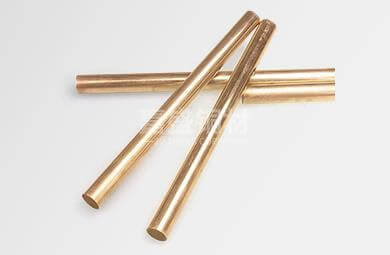
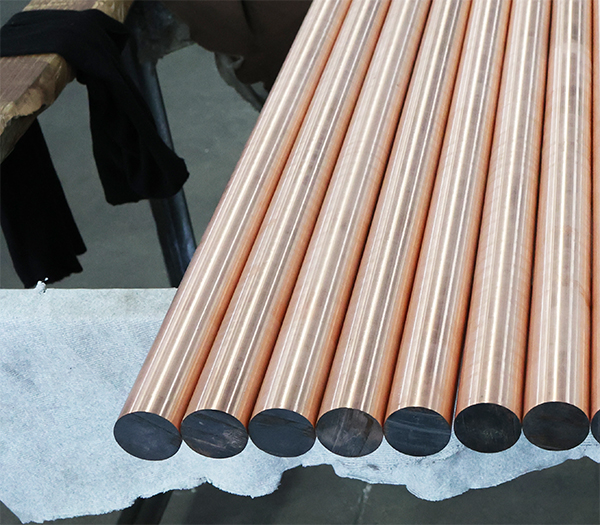

Beryllium Copper Strip: Manufacturing Process and Quality Control
Overview
Beryllium copper (BeCu) strips are high-performance copper alloys prized for their unique combination of strength, conductivity, and fatigue resistance. This article outlines the key manufacturing stages and critical quality control checkpoints for producing premium-grade beryllium copper strip materials.
Manufacturing Process
1. Melting and Casting
The process begins with vacuum induction melting (VIM) or vacuum arc remelting (VAR) to produce beryllium copper ingots. Beryllium content typically ranges from 0.2% to 2.0%, with cobalt or nickel added to enhance properties. Vacuum environments prevent oxidation and minimize gas porosity.
2. Hot Rolling
Ingots are heated to 750 to 900 degrees Celsius and hot-rolled into slabs. This step breaks down the cast structure and reduces thickness to approximately 10 to 20 millimeters. Temperature control is critical to avoid surface cracking and ensure uniform grain structure.
3. Cold Rolling
Multi-pass cold rolling progressively reduces strip thickness to the final gauge, often 0.05 to 3.0 millimeters. Intermediate annealing at 500 to 700 degrees Celsius is performed between passes to restore ductility. Precision rolling mills with automatic gauge control maintain tight thickness tolerances of plus or minus 0.005 millimeters.
4. Solution Annealing
A critical heat treatment at 780 to 820 degrees Celsius dissolves beryllium into the copper matrix, creating a supersaturated solid solution. Rapid quenching with water or oil locks this structure in place, providing maximum formability before final age hardening.
5. Age Hardening (Precipitation Heat Treatment)
Controlled heating at 280 to 350 degrees Celsius for 1 to 3 hours precipitates fine beryllide particles throughout the matrix. This dramatically increases strength and hardness while maintaining reasonable electrical conductivity. Temperature uniformity within plus or minus 3 degrees Celsius is essential.
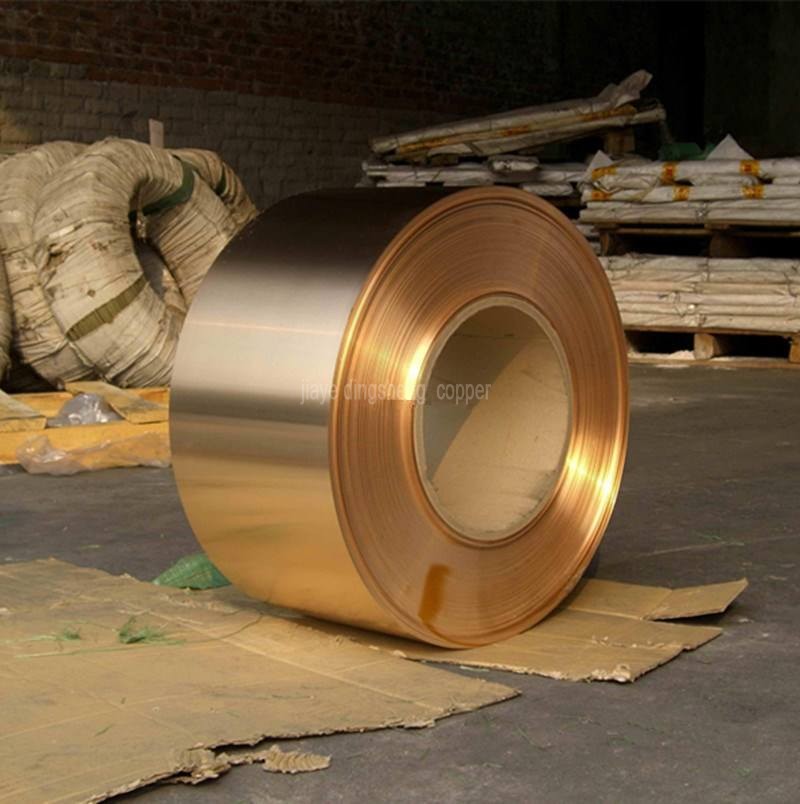
6. Surface Treatment and Finishing
Final steps include pickling, bright annealing, tension leveling, and edge trimming. Surface coatings such as anti-tarnish oils or protective films may be applied to prevent oxidation during storage and transport.
Quality Control Checkpoints
Raw Material Stage: Beryllium content and impurity levels are verified using ICP-OES and XRF analysis.
Casting Stage: Porosity and macro-segregation are checked via ultrasonic testing and macro-etching.
Hot Rolling Stage: Grain size and surface defects are examined through metallography and eddy current testing.
Cold Rolling Stage: Thickness tolerance and flatness are measured using laser micrometers and straightness gauges.
Solution Annealing Stage: Hardness and conductivity are monitored with Rockwell hardness testers and eddy current instruments.
Age Hardening Stage: Tensile strength, elongation, and conductivity are tested using universal testing machines and four-point probes.
Final Inspection: Surface finish and dimensional accuracy are verified through visual inspection, profilometers, and coordinate measuring machines.
Critical Quality Metrics
Mechanical Properties: Tensile strength typically reaches 1,000 to 1,400 megapascals in peak-aged condition for C17200 alloy, with hardness of 36 to 42 HRC.
Electrical Conductivity: Ranges from 15% to 30% IACS depending on temper and alloy grade.
Surface Quality: Must be free of scratches, pits, and oxidation stains. Surface roughness should be 0.4 micrometers or less for precision applications.
Flatness: Peak-to-valley deviation should be less than 5 I-units per meter.
Conclusion
Producing high-quality beryllium copper strip demands precise control across every stage, from alloy formulation through final heat treatment. Rigorous quality assurance, including real-time process monitoring and statistical process control, ensures consistent material performance for demanding applications in aerospace connectors, electronic springs, and precision instrumentation.
References
1. ASTM B194-23, Standard Specification for Copper-Beryllium Alloy Plate, Sheet, Strip, and Rolled Bar. ASTM International, West Conshohocken, PA, 2023.
2. ASM Handbook, Volume 2: Properties and Selection: Nonferrous Alloys and Special-Purpose Materials. ASM International, 10th edition, 1990. (Beryllium Copper section)
3. Brush Wellman Inc. Beryllium Copper Alloy 172 Technical Data Sheet. Materion Corporation, 2015.
4. J.R. Davis, Copper and Copper Alloys. ASM Specialty Handbook, ASM International, 2001.
# Tags:
How to Eliminate Porosity in Beryllium Copper Casting?
Previous Post