-
20-year dedicated manufacturer
-
Certified Company
ISO 9001:2015

Which has higher hardness, aluminum bronze or beryllium bronze?
The hardness of beryllium bronze is higher than that of aluminum bronze.
Overview of Aluminum Bronze and Beryllium Bronze
Aluminum bronze and beryllium bronze are two common types of bronze alloys. They are both metal alloys composed of copper, zinc, and other elements. Among them, aluminum bronze contains elements such as aluminum and iron, while beryllium bronze contains a small amount of beryllium.
Characteristics of Hardness of Aluminum Bronze and Beryllium Bronze
Hardness comparison
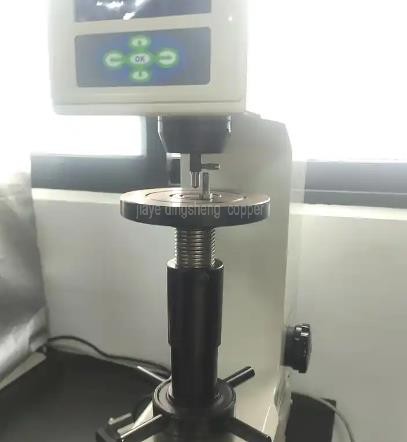
In terms of hardness, the hardness range of aluminum bronze is usually between HB90 and 110, which belongs to the medium hardness grade. Compared with common brass and red copper, it has higher hardness. While the hardness of beryllium bronze is between HB100 and 140, it is slightly lower than that of aluminum bronze, but still significantly higher than common brass and red copper. Therefore, it can be concluded that aluminum bronze has a slight edge in hardness.
The hardness of aluminum bronze lies between that of copper and brass, and it has good wear resistance and corrosion resistance. Aluminum bronze is 3-4 times harder than pure copper, but its strength is lower. It is often used in situations where high corrosion resistance is required, such as bearings for high-speed aircraft and hydraulic equipment.
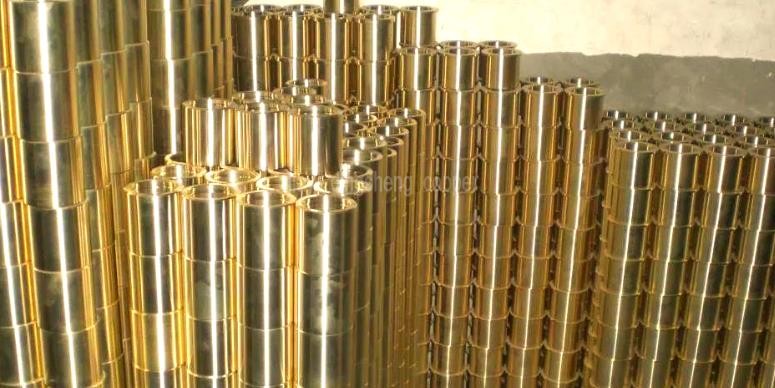
Beryllium bronze is a high-strength, high-hardness, and high-toughness alloy. Its hardness is approximately twice that of aluminum bronze and it has excellent mechanical properties and heat resistance. Beryllium bronze is widely used in fields such as molds, ships, aircraft, and other areas.
Application Areas of Aluminum Bronze and Beryllium Bronze
Due to their respective characteristics, aluminum bronze and beryllium bronze have extensive applications in different fields.
Aluminum bronze is suitable for bearings with high corrosion resistance, automotive parts, seawater pipelines, and chemical valves, among others. Additionally, in the fields of shipbuilding, aircraft, and trains, aluminum bronze is used as anchor chains, transmission shafts, propellers, and baffles, etc., as related components.
Beryllium bronze is widely used in mold manufacturing, shipbuilding, aircraft manufacturing, and other fields. Moreover, its heat resistance is good, and it is often used to manufacture components for high-temperature working environments such as automotive engine parts and rocket engine parts.
the hardness characteristics of aluminum bronze and beryllium bronze, as well as their application fields. It is necessary to select different materials based on specific circumstances to meet the requirements of different fields.
# Tags:
-
Which has higher hardness
Phosphor Bronze Grades & Models: C51000, C52100, C54400 Complete Guide
Previous Post