
-
20-year dedicated manufacturer
-
Certified Company
ISO 9001:2015
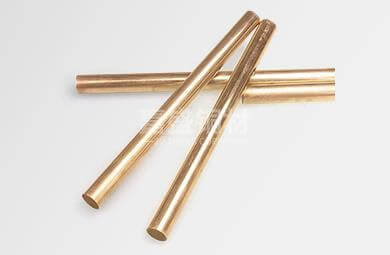
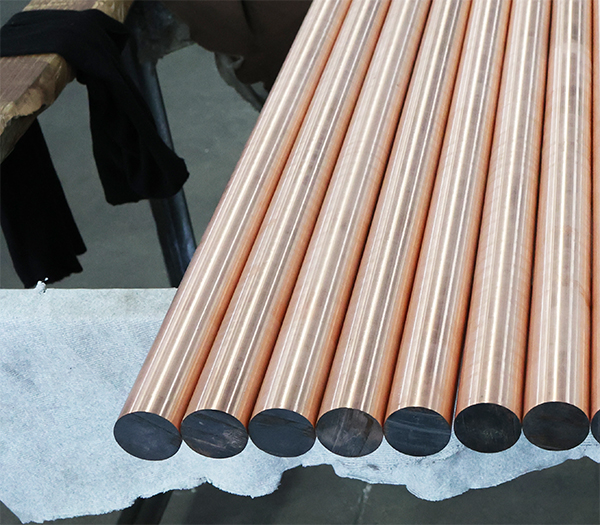

Manufacturing Process and Quality Control Key Points for Beryllium Copper Strip
Beryllium Copper Strip combines high strength, high elasticity, and excellent electrical and thermal conductivity. It is widely used in aerospace connectors, precision instrument elastic components, semiconductor test probes, and relay contact springs. This article systematically outlines the production process and quality control key points for beryllium copper strip from melting to finished products, providing a practical reference for material selection and procurement.
I. Production Process Flow of Beryllium Copper Strip
1. Vacuum Melting and Casting
Production typically utilizes electrolytic copper, beryllium-copper master alloys, and cobalt/nickel additives as raw materials, using Vacuum Induction Melting (VIM). The vacuum environment effectively suppresses beryllium oxidation and gas absorption, reducing blowholes and inclusions in the ingot. For mainstream grades like C17200, beryllium content is controlled at 1.80–2.00%, with total cobalt and nickel content not less than 0.20%.
2. Homogenization Annealing and Hot Rolling
Ingots undergo homogenization annealing at 800–850 °C for 4–8 hours to eliminate dendritic segregation, followed by heating to 780–820 °C for hot rolling to reduce the ingot down to medium plates of 10–20 mm thickness. The hot rolling temperature window is narrow; the finishing rolling temperature must be strictly controlled at no less than 650 °C to prevent surface cracking.
3. Cold Rolling and Intermediate Annealing
Medium plates are progressively reduced to target thickness (commonly 0.05–3.0 mm) through multi-pass cold rolling. Deformation per pass is controlled at 20–37% (e.g., 20–30% for 1/2H temper), with intermediate annealing at 500–700 °C interspersed during cold rolling to restore ductility and prevent excessive work hardening. Precision rolling mills equipped with AGC (Automatic Gauge Control) maintain thickness tolerances within ±0.005 mm.
4. Solution Treatment
Solution treatment is the critical step for obtaining subsequent age-hardening capabilities in beryllium copper strip. The strip is held at 780–820 °C and rapidly water-quenched, with transfer time from furnace exit to water entry kept within 3–5 seconds. This ensures beryllium atoms form a supersaturated solid solution within the copper matrix, creating a soft and formable quenched condition.
5. Age Hardening
Quenched strips undergo aging treatment at 315–350 °C for 2–3 hours to precipitate dispersed γ' strengthening phases (CuBe metastable phase). After aging, tensile strength reaches 1200–1450 MPa with a hardness of 36–42 HRC, while maintaining electrical conductivity of 17–22% IACS. Furnace temperature uniformity must be controlled within ±3 °C to avoid over-aging (which causes softening due to equilibrium γ phase formation) or under-aging.
6. Finishing and Surface Treatment
Final processes include acid pickling to remove oxide scale, tension leveling, slitting with deburring, and applying rust-preventive oil or protective film. The surface must be free of scratches, pits, or oxidation spots; precision applications require surface roughness Ra ≤ 0.4 μm and flatness within I-unit < 5/m.
II. Overview of Key Quality Control Points
Quality consistency in beryllium copper strip relies on full-process control. The core inspection items are summarized below:
Table 1: Key Quality Control Points for Beryllium Copper Strip
Control Stage | Key Quality Control Points
|
Chemical Composition | Analyze via ICP-OES / Optical Emission Spectrometry to control Be at 1.80–2.00%, Co+Ni ≥ 0.20%, and impurities Fe/Al/Si each ≤ 0.15%. |
Melting & Casting | Vacuum Induction Melting (VIM) or Electroslag Remelting to prevent oxidation and gas absorption; ingots undergo ultrasonic testing and macro-etching to check for shrinkage cavities and porosity. |
Hot Rolling / Breakdown | Homogenization annealing at 800–850 °C followed by hot rolling within 780–650 °C to prevent surface cracking and uneven grain size. |
Cold Rolling & Annealing | Multi-pass cold rolling with pass deformation of 20–37% and intermediate annealing at 500–700 °C; laser gauge control for thickness tolerance ±0.005 mm. |
Solution Treatment | Solutionizing at 780–820 °C followed by rapid water quenching with transfer time under 3–5 seconds to obtain supersaturated solid solution. |
Age Hardening | Aging at 315–350 °C for 2–3 h with furnace uniformity within ±3 °C; verify hardness (36–42 HRC) and electrical conductivity (17–22% IACS). |
Surface & Dimensions | Pickling, tension leveling, slitting and deburring; surface roughness Ra ≤ 0.4 μm, flatness within I-unit < 5/m. |
III. Typical Alloys and Performance Reference
Common beryllium copper strip grades include C17200 (High Beryllium, Be 1.8–2.0%), C17500 (Beryllium Cobalt Copper), and C17510 (Beryllium Nickel Copper). C17200 offers the highest strength after aging, making it ideal for elastic components; C17500/C17510 provide superior electrical and thermal conductivity, making them suitable for high-heat dissipation connectors and electrodes. Procurement specifications should clearly define the alloy grade, delivery temper (solutionized or age-hardened), thickness tolerance, and heat treatment responsibilities.
Conclusion
The performance advantages of beryllium copper strip stem from precise matching of chemical composition and thermal processing. From vacuum melting and hot breakdown to solutionizing and aging, control over temperatures and deformation rates directly governs tensile strength, electrical conductivity, and dimensional stability. Partnering with suppliers capable of full-process testing and locking in material tempers and acceptance standards in contracts is critical to securing batch consistency.
# Tags:
-
beryllium copper strip, C17200, copper alloy manufacturing, solution treatment, age hardening, heat treatment, precision copper alloy, quality control
C17510 Beryllium Nickel Copper for Springs and Electrical Contacts
Previous Post